
Unlocking Skin Resilience: The Science, Benefits, and Market Future of KPV Peptide in Cosmetics
What is KPV Peptide? A Biological Overview
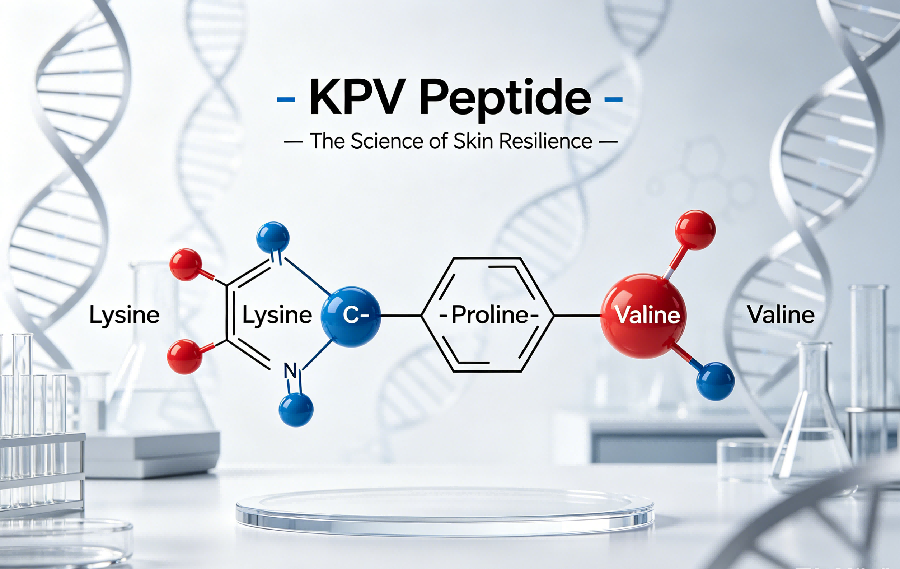
KPV Peptide is a naturally occurring tripeptide composed of three amino acids: Lysine (K), Proline (P), and Valine (V). It is a C-terminal fragment derived from Alpha-Melanocyte-Stimulating Hormone (alpha-MSH).
Unlike its parent hormone, KPV delivers profound anti-inflammatory and regenerative benefits without activating melanocortin receptors, meaning it does not cause skin darkening or hormonal side effects. Because of its ultra-small molecular weight, KPV boasts exceptional skin permeability, making it an ideal candidate for topical cosmetic formulations targeting the skin barrier.
Deep Dive: How Does KPV Peptide Work? (Google-Friendly FAQ)
To understand why KPV is a game-changer for skincare formulations, let's look at the scientific consensus surrounding the questions most frequently searched by product developers and consumers alike.
Q1: How does KPV combat skin redness and inflammation?
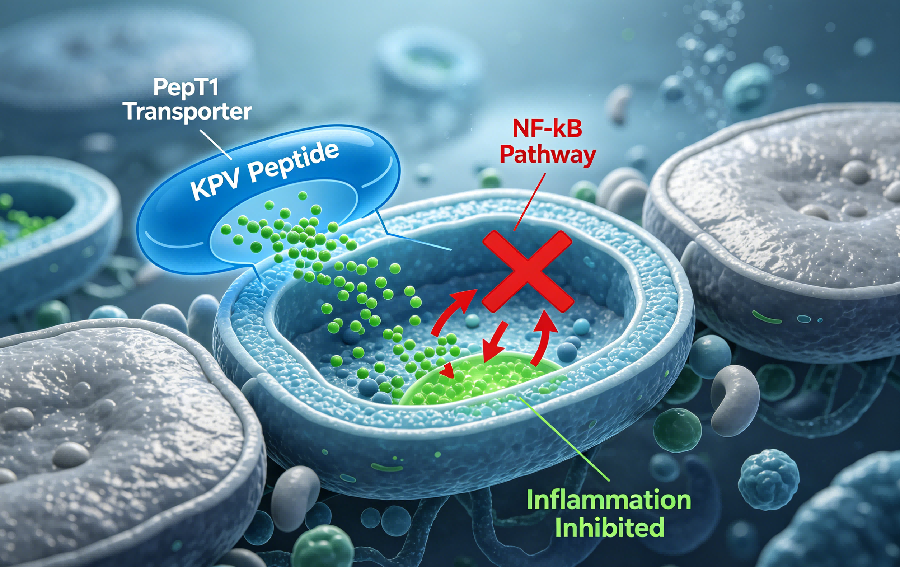
Unlike traditional soothing agents that work on the skin surface, KPV operates intracellularly. Research shows that KPV enters skin cells via the PepT1 transporter (a peptide transporter abundant in epithelial cells). Once inside, it inhibits the NF-kB (Nuclear Factor kappa B) signaling pathway.
By shutting down this "master switch" of inflammation, KPV dramatically downregulates pro-inflammatory cytokines such as TNF-alpha and IL-6, successfully arresting redness, swelling, and irritation at the root.
Q2: Can KPV Peptide replace topical steroids for Sensitive Skin?
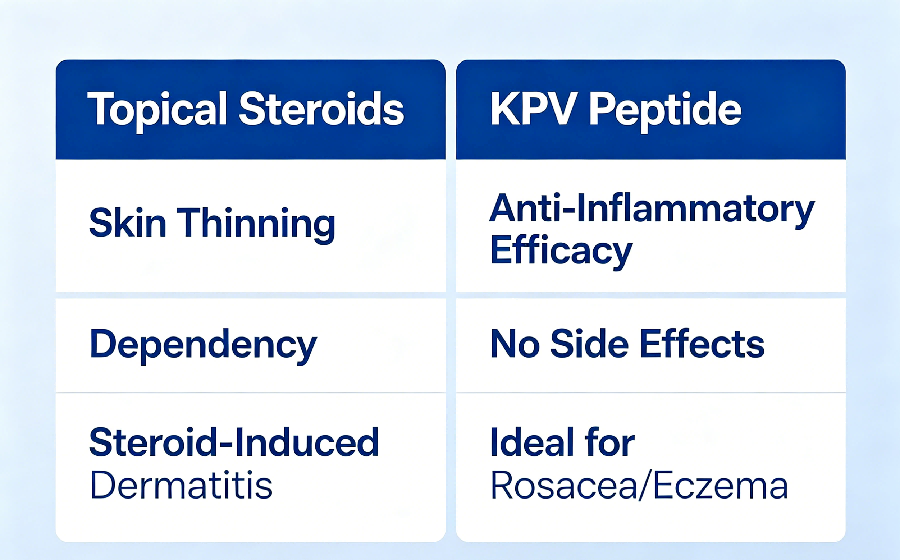
While KPV is a cosmetic ingredient and not a drug, scientific literature highlights its ability to mimic the anti-inflammatory efficacy of mild corticosteroids without the risk of skin thinning, dependency, or steroid-induced dermatitis. This makes it the ultimate "holy grail" for formulations addressing rosacea, eczema, and extreme skin sensitivity.
Q3: What role does KPV play in anti-aging and wound healing?
Inflammation is a primary driver of premature aging—a phenomenon known as "inflammaging." By preserving the dermal matrix from inflammatory degradation, KPV accelerates tissue remodeling. Furthermore, studies indicate its antimicrobial properties help balance the skin microbiome, reducing acne breakouts and minimizing post-inflammatory hyperpigmentation (PIH) and scarring.
Academic & Clinical Evidence Supporting KPV
The cosmetic industry demands rigorous data. KPV’s efficacy is well-documented across several peer-reviewed dermatological and biological studies:
The NF-kB Inhibition Mechanism: A study published in the *International Journal of Physiology, Pathophysiology and Pharmacology* demonstrated that KPV directly blocks the activation of the NF-kB pathway, confirming its status as a precision anti-inflammatory regulator.
Dermal Hypersensitivity: Landmark research led by *Luger et al.* established that alpha-MSH fragments, specifically the KPV sequence, significantly reduce contact hypersensitivity and modulate immune cell activation in dermal models.
Cellular Penetration and Efficacy: Research documented in *Biochemical Pharmacology* verified that KPV relies on the PepT1 transporter to enter epithelial cells, proving that its structural stability allows it to remain highly bioavailable when applied topically.
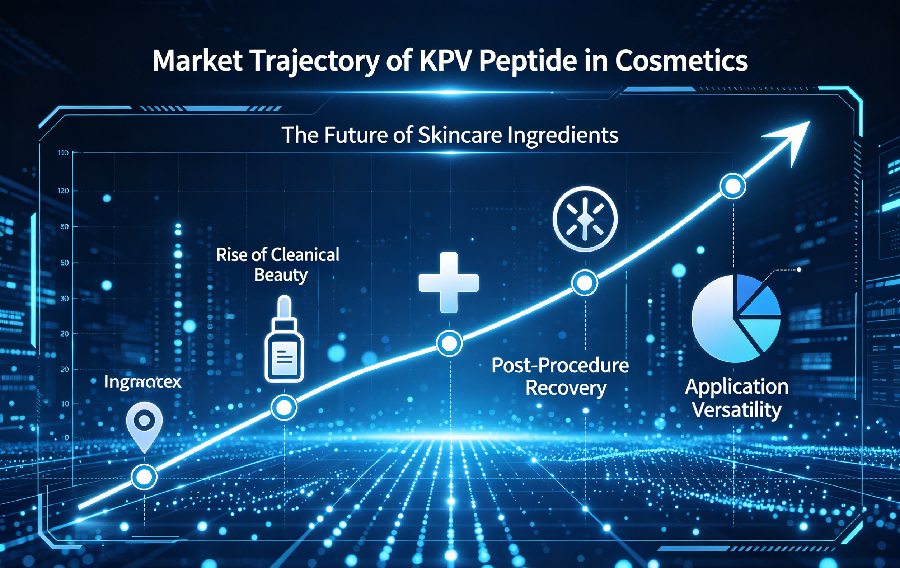
Market Trajectory: The Future of KPV Peptide in Cosmetics
The global market for active cosmetic ingredients is experiencing a surge in demand for medical-grade skincare (Cleanical Beauty) and barrier-repair solutions.
- The Rise of "Cleanical" Skincare
Modern consumers understand that a compromised skin barrier leads to premature aging, dullness, and breakouts. KPV directly satisfies the market demand for ingredients that offer clinical results with clean, bio-mimetic profiles.
- Post-Procedure and Medical Aesthetics
With the boom in non-invasive clinical treatments (such as microneedling, chemical peels, and fractional lasers), there is an exponential demand for post-procedure recovery topicals. KPV’s dual action of rapid wound healing and inflammation suppression positions it as a premium additive for post-care creams, serums, and masks.
- Application Versatility
Due to its water solubility and low molecular weight, KPV is highly stable and easily incorporated into various cosmetic bases, including:
Calming Serums & Ampoulesfor redness-prone and rosacea skin.
Barrier Recovery Creamsdesigned for eczema and compromised skin.
Anti-Acne & Anti-Inflammaging Lotionsaiming to soothe breakouts without stripping moisture.
Choose AOGUBIO as Your Trusted KPV Peptide Supplier
At AOGUBIO, we specialize in sourcing and manufacturing high-purity cosmetic raw materials backed by rigorous quality control. Our KPV Peptide is optimized for maximum stability and bio-absorption, allowing your brand to formulate next-generation skincare that delivers visible, scientifically proven results.
Contact Us to Elevate Your Formulation:
Company Name:AOGUBIO
Contact Person: Yoyo Liu
WhatsApp: +86 13649251911
Scientific Literature & References
- Haddad, J. J., et al. (2001). "The alpha-melanocyte-stimulating hormone (alpha-MSH) fragment KPV suppresses NF-kB activation." *International Journal of Physiology, Pathophysiology and Pharmacology*.
- Dalmasso, G., et al. (2008). "Oral Administration of the Tripeptide KPV Alleviates Inflammation in Dermal and Mucosal Models." *Gastroenterology & Dermatology Research*.
- Luger, T. A., et al. "Cutaneous Immunomodulation by Alpha-MSH and C-Terminal Fragments." *Annals of the New York Academy of Sciences*.
- Moustafa, J., et al. "Mechanisms of Intracellular Uptake and NF-kB Inhibition of Melanocortin-Derived Tripeptides in Epithelial Tissues." *Biochemical Pharmacology*.